

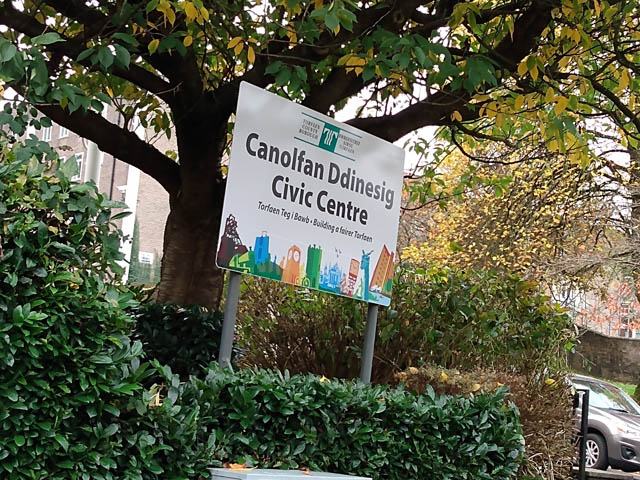
A COUNCIL could receive £6.3 million to boost its local economy in the latest scheme devised to replace funds previously received from the European Union.
However Torfaen Borough Council’s cabinet will be told there is uncertainty over how much it will actually receive and whether it will have complete control over how all the money is spent with council officers also highlighting other concerns on how the fund will operate.
The Labour cabinet is being asked to approve its outline Local Growth Fund investment plan when it meets on Tuesday, February 24. Councillors in neighbouring Monmouthshire are due to be briefed on the UK Government fund at a seminar a day earlier.
Paul Griffiths, Labour’s deputy leader of Monmouthshire council, last year criticised how the outgoing Shared Prosperity Fund was established by the previous Conservative UK government. He also said more time should have been taken to consult with local councils, and others, on how the replacement fund should work after the new Labour government promised to involve the Welsh Government.
However the report for Torfaen’s cabinet states there has been a “lack of guidance from the Welsh Government” on how to develop the investment plans that would enable them to be up and running from when the new three-year fund opens for its first transitional year on April 1.
Torfaen’s interim economy chief, Greg Macdonald, said in the report: “In response, local and regional authorities have taken the initiative to develop outline investment plans on the information provided to date to place pressure on the Welsh Government and make the point that locally authorities are ready to deliver.”
As a result Torfaen has estimated its share of the £79m allocated to the 10 local authorities in South East Wales, for 2026/27, at £6.3m. The UK Government has allocated £547m to Wales over the lifespan of the fund from this April to March 2029.
Torfaen’s outline investment plan proposes £1.5m should be allocated to town centre improvements while £446,000 will be used to support plans to boost the borough as a destination and its food sector.
Other allocations are towards improving skills, space for new businesses including an engineering hub, clean energy and green infrastructure such as natural outdoor spaces and planting and the foundation economy which aims to ensure money is spent and retained locally.
Mr Macdonald’s report said Torfaen agrees with the objectives of the fund, to support businesses to be competitive and more productive, support people into work and boost their skills, supporting green infrastructure and energy efficiency and investing in infrastructure to driver regional economies. The council also considers those objectives to match its own plans for economic growth and tackling inequalities.
But the report said concerns over the new fund include the split between capital funding, for larger one-off costs, and revenue for day-to-day spending. That 70/30 split would mean Torfaen receives only £1.9m for revenue in 2026/27 and £4.4m capital meaning there will only be a limited ability to support business start-ups and help people back into work.
The council is also likely to struggle to spend the capital allocation in just a year due to time constraints such as finding contractors and getting work started and Mr Macdonald said it will likely have to focus on existing projects or “quick wins” such as buying property.
His report said there is also uncertainty over how funding will be allocated between schemes local councils want to support in their own areas and programmes backed at a regional or national level. Mr Macdonald said: “There are concerns that local delivery will be forced to align to national and regional programmes meaning that local specific needs, demands and aspirations will be missed.”
When Monmouthshire deputy leader Cllr Griffiths criticised the previous scheme he also highlighted the lack of flexibility for councils to make their own spending decisions.